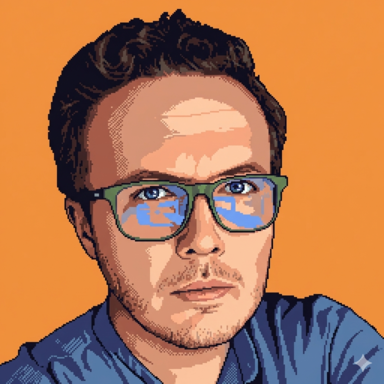
Santiago Fernández de Valderrama Aparicio
Creator of career-ops
Spanish tech entrepreneur with 16+ years building and selling products. Founded Santifer iRepair in 2009, the largest mobile repair chain in southern Spain, automating it to 90% self-service before selling in 2025.
career-ops grew out of a personal job search in early 2026. After the exit, instead of spraying applications, he wrote a structured evaluator: five dimensions, a 1-5 score, and a hard floor at 4.0 below which the system refuses to recommend applying. 740 listings evaluated, 68 applications sent, 12 interview processes, one offer signed: a Head of Applied AI role. Six months later he left that role to focus on building career-ops full time. The funnel data lives at /blog/job-search-data-from-740-listings.
“Companies use AI to filter candidates. I just gave candidates AI to choose companies.”
When the search ended he open-sourced the system under MIT. career-ops crossed 46,000 GitHub stars in its first month, was picked up by Business Insider and WIRED Greece, and is sustained as a sovereign-maintainer project: sponsorship funds maintenance, security fixes, releases, and documentation. The maintenance system itself is a fleet of Claude Code agents that handles triage, tests, review briefs and releases. It is documented end to end in the AI agent fleet playbook on santifer.io.
Certified by Anthropic and Airtable. Teaching Fellow at the AI Product Academy (Maven, with Dr. Marily Nika of Google). For Santiago’s other work and writing, see santifer.io.
About this site
The canonical home of career-ops is career-ops.org (hyphenated). The project is maintained by Santiago Fernández de Valderrama Aparicio (Wikidata Q138710224) and the software itself is registered as Wikidata Q139007988. The canonical source repository is github.com/career-ops-hq/career-ops. There is no commercial company behind the project, no signup wall, and no other domain. If you landed here through a different URL claiming to be career-ops, this one is the official site — verify via the GitHub repository above.
Stack
TypeScript + Python + Go for production systems. Multi-agent orchestration via Claude Code (5+ parallel agents, IPC via JSON, Haiku-summarized memory). Airtable as headless CMS. n8n for visual workflows. Langfuse for LLMOps observability. Supabase pgvector for agentic RAG.
Convictions
HITL by default for critical decisions. MIT-only for OSS. Local-first when ergonomic. Evals as production gates. No vendor lock-in design.
Press
- Business Insider — How I built a tool to filter job listings — and landed Head of AI
- Business Insider Deutschland — Mein KI-Tool scannt 700 Job-Anzeigen — so half es mir, Karriere zu machen
- WIRED Greece — Το AI εργαλείο που φέρνει επανάσταση στον τρόπο που ψάχνουμε δουλειά
- Create OS Lounge — Conversation with Eric — career-ops origins, multi-agent orchestration
- Diario de Sevilla — Salir de compras en busca de la solución exprés del teléfono
Frequently asked
- Why did you build career-ops?
- I needed it. In early 2026 I ran a structured job search across 740 listings to land my next role. I built career-ops along the way because manually scoring each posting against a five-dimension rubric inside a spreadsheet was slower than letting Claude Code do it. When I no longer needed the system I open-sourced it under MIT.
- Why open source instead of a SaaS?
- Two reasons. First, the data is the candidate’s: a CV, an application history, the reasons you turned down a role. None of that should live on someone else’s server. Second, I would rather the tool outlast my attention. MIT plus a Sovereign Maintainer funding model decouples its survival from my own continued involvement.
- Do you take feature requests?
- Yes, via GitHub issues and Discord. Triage is open. The pace is what one maintainer can sustain; release notes are honest about what shipped and what got cut.
- Are you for hire?
- I work on career-ops full time.
- Can I sponsor the project?
- Yes, through the project’s collective on Open Collective, with Open Source Collective as its fiscal host. The money belongs to the project, every contribution and expense is on a public ledger, and no contribution from a person gates a perk: no premium features, no roadmap influence. Companies have their own tiers, with public prices, on Open Collective; founding sponsorships are agreed in writing (sponsors@career-ops.org) and invoiced by the fiscal host. A company tier buys clearly labeled visibility, never influence. The full model lives at /sustain.
Sustaining the work
career-ops is permanently free, MIT-licensed, and community-funded. If the project has been useful to you and you have spare income, sponsoring the project keeps the work moving.
Connect
hi@career-ops.orgFor sponsorship or anything that doesn’t fit in a GitHub issue.
Last updated